Phlebotomy Careers in California: Schedules, Settings, and Certification
For anyone considering a phlebotomy career, California is one of the more active markets in the country. Opportunity is spread across hospitals, diagnostic laboratories, clinics, blood banks, and a growing mobile phlebotomy sector. U.S. Colleges’ Phlebotomy Technician program, offered at six Southern California campuses, is CDPH-approved .
Here’s a closer look at how phlebotomy schedules vary by setting, where California jobs tend to be concentrated, and what the CPT-1 certification process involves.
What a Phlebotomist’s Work Week Looks Like
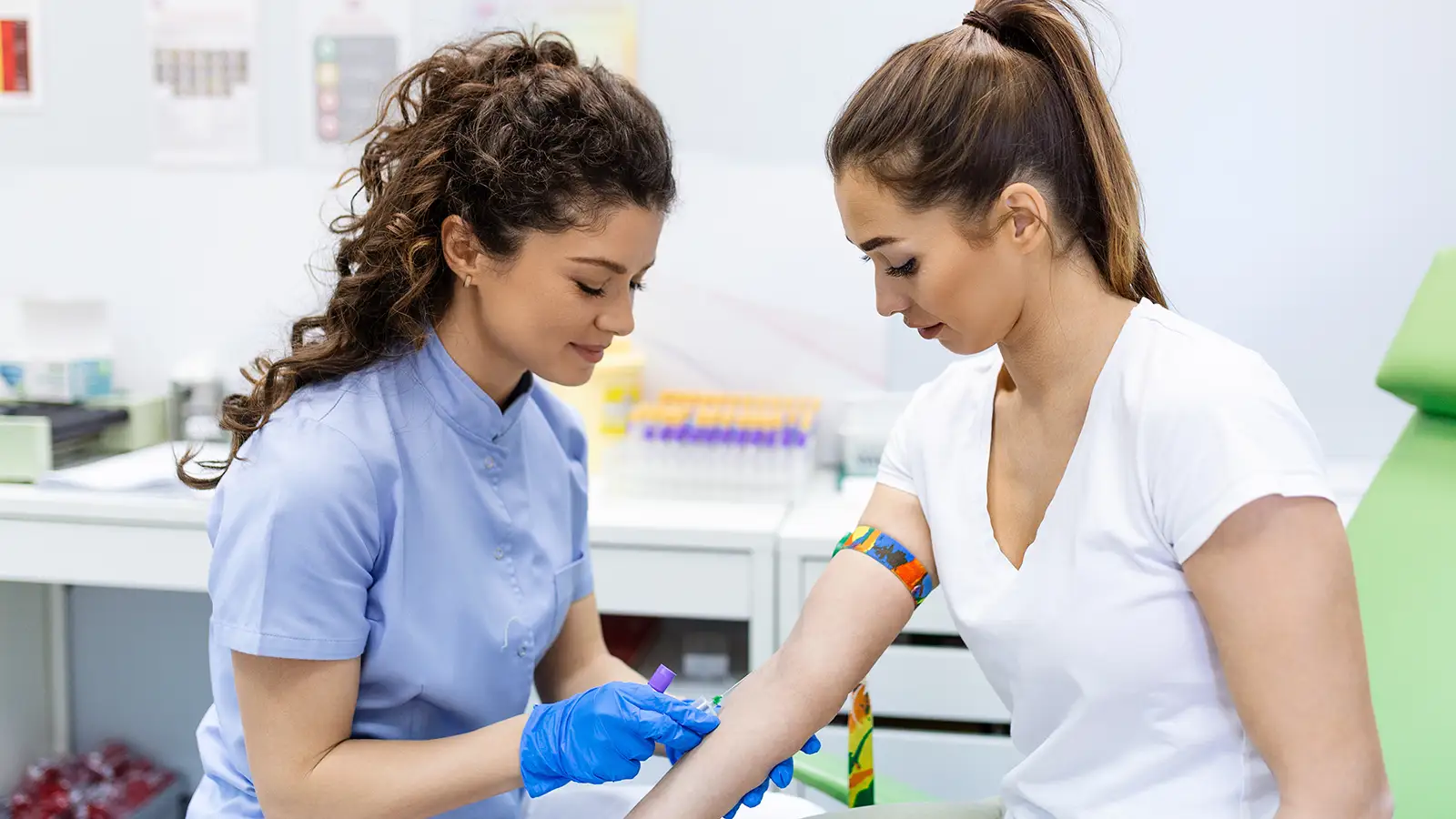
Most phlebotomists work full-time, 40-hour weeks. The most common arrangement is five 8-hour shifts per week, though hospital settings frequently offer alternatives such as four 10-hour shifts or three 12-hour shifts (mirroring nursing schedules at 36 hours per week). Part-time positions are widely available, typically ranging from 10 to 30 hours per week, and are popular among students pursuing further healthcare education.
The defining feature of a phlebotomist’s daily schedule is the early start. Hospital phlebotomists typically begin between 4:00 and 6:00 AM because blood draws are most accurate when patients are fasting and at rest, before meals, medications, or physical activity. A typical hospital day shift runs roughly 5:00 AM to 1:30 PM or 6:00 AM to 2:30 PM. Phlebotomists arrive, receive their patient list from the laboratory, prioritize STAT (urgent) orders, prepare their tray, then begin floor-to-floor rounds.
How the schedule varies depends entirely on the work setting:
Hospitals operate 24/7 and require rotating day, swing (2:30 to 10:30 PM), and night shifts (10:00 PM to 6:30 AM). Weekend and holiday coverage is mandatory on a rotating basis, and on-call requirements are common.
Outpatient clinics and physician offices offer the most predictable schedules, generally Monday through Friday, 8:00 AM to 5:00 PM, with no night shifts, rare weekend hours, and major holidays off. Some smaller physician offices only need a phlebotomist for two to four hours per day, creating very part-time positions.
Diagnostic laboratories typically schedule phlebotomists Monday through Friday with early starts, commonly 6:00 to 6:30 AM through mid-afternoon, plus rotating Saturday half-days.
Blood banks and donation centers vary the most. Fixed donor centers run standard 8-hour shifts, but mobile blood drive phlebotomists may work 10 to 12 hours once you account for travel, setup, and teardown at community locations. Donation organizations often require broad weekly availability with two consecutive days off.
Where California Phlebotomists Work
Phlebotomy jobs in California cluster in two settings above all others: hospitals and medical and diagnostic laboratories. Beyond those, phlebotomists are employed across other ambulatory healthcare services, physician offices, and outpatient care centers.
Southern California is the state’s phlebotomy employment center. The greater Los Angeles, Inland Empire, Orange County, and San Diego markets together make up a large share of phlebotomy work statewide, supported by a dense network of major hospital systems and laboratory operations.
Demand for phlebotomists in California is supported by the state’s aging population, the expansion of preventive care and wellness screening, rising chronic disease prevalence, and the growing role of personalized medicine and genetic testing.
Mobile phlebotomy is the fastest-growing emerging segment. In Southern California, mobile phlebotomy companies actively recruit technicians, particularly in the Inland Empire, to perform in-home and on-site draws for patients who can’t easily travel to a lab.
California’s CPT-1 Certification: A Step-by-Step Roadmap
California is one of only four states that mandates state-level phlebotomy certification. You cannot legally perform blood draws in California without CDPH certification, unless your existing professional license already includes phlebotomy in its scope of practice.
The CDPH administers three certification levels: Limited Phlebotomy Technician (LPT) for skin puncture only, Certified Phlebotomy Technician I (CPT-1) for venipuncture and skin puncture, and Certified Phlebotomy Technician II (CPT-2), which adds arterial puncture. CPT-1 is the standard credential that the vast majority of employers require and most training programs target.
Step 1: Meet Basic Prerequisites
Applicants must hold a high school diploma or GED. Official transcripts must be sent directly to CDPH Laboratory Field Services by the issuing institution. International transcripts require evaluation by a NACES or AICE member agency.
Step 2: Complete a CDPH-Approved Training Program
U.S. Colleges’ Phlebotomy Technician program is CDPH-approved and located in California.
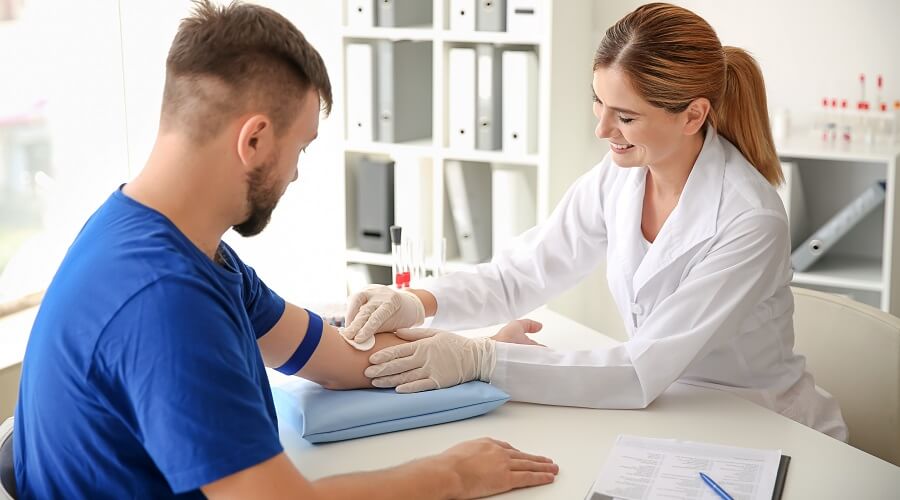
The program covers anatomy and physiology, medical terminology, infection control, phlebotomy technique, and specimen handling through classroom instruction and hands-on lab practice. It includes a mandatory 40-hour clinical externship in an active healthcare setting, during which students complete a minimum of 50 successful venipunctures and 10 successful skin punctures under direct supervision, fulfilling the CDPH requirement for CPT-1 certification eligibility.
The program totals 104.5 hours (64.5 hours of classroom and lab instruction plus the 40-hour externship), with flexible scheduling available across all six Southern California campuses.
Step 3: Pass a CDPH-Approved National Certification Exam
Candidates must pass a certification exam from one of the six CDPH-approved national certifying organizations. UEI prepares students for the National Healthcareer Association Exam (NHA).
| Organization | Abbreviation |
| National Healthcareer Association | NHA |
Exam format and fees vary by organization and change periodically, so confirm the current details directly with the agency you choose before registering.
Step 4: Apply to CDPH for State Certification
After passing the national exam, candidates submit their application through the CDPH online licensing portal. The application requires a non-refundable fee, submission of supporting documents, and completion of DOJ and FBI background check fingerprinting through Live Scan. If you don’t submit all required documents, CDPH notifies you before the application is abandoned, and an abandoned application has to be resubmitted with a new fee.
Step 5: Receive Your CDPH Certification
As of June 18, 2019, CDPH no longer mails physical license cards. Once your application is approved, you download and print your certificate from your online account, and you can reprint it as often as needed while it’s active.
Renewal Requirements
California phlebotomy certifications require periodic renewal with continuing education. CDPH updated its renewal structure recently, so confirm the current renewal period, fee, and continuing education requirements directly with CDPH Laboratory Field Services before you
plan your renewal. Certifications not reinstated within one year of expiration may require retaking the national exam.
What This Means for Prospective Southern California Students
The phlebotomy career pathway in California is clearly structured. The state’s mandatory certification requirement adds an initial step not required in most states. Southern California’s concentration of major hospital systems, diagnostic laboratory networks, and a growing mobile phlebotomy sector makes it one of the more active regions in the state for this kind of work.
Completing training and certification opens the door to work across a range of settings, from the predictable schedule of outpatient clinics to hospital laboratory services. Phlebotomy can also serve as a starting point toward further healthcare training in fields such as medical laboratory technology, nursing, and clinical laboratory science.
If you’re ready to get started, U.S. Colleges offers a CDPH-approved Phlebotomy Technician program at six Southern California campuses, with flexible scheduling designed to fit around existing commitments. You can also learn more about what phlebotomy technicians do day to day before you enroll. Contact us at (866) 591-8588 or visit your nearest campus to speak with an admissions representative.
U.S. Colleges does not promise or guarantee employment to any student or graduate. Financial assistance available for those who qualify. Course length may vary.