3 Steps to Become a Clinical Medical Assistant in California
Becoming a clinical medical assistant takes three steps: understanding what the role involves, completing a hands-on training program, and starting your job search. At U.S. Colleges, you can complete the Clinical Medical Assistant program in as few as 12 weeks, earning a Certificate in the Clinical Medical Assistant program along the way.
Step 1: Learn About the Clinical Medical Assistant Field
Before enrolling in a program, it helps to understand what clinical medical assistants actually do on the job. The role combines hands-on patient care with administrative responsibilities, and the daily workload shifts depending on the setting.
What clinical medical assistants do every day
In a typical shift, Clinical Medical Assistants perform a range of clinical and administrative tasks, including:
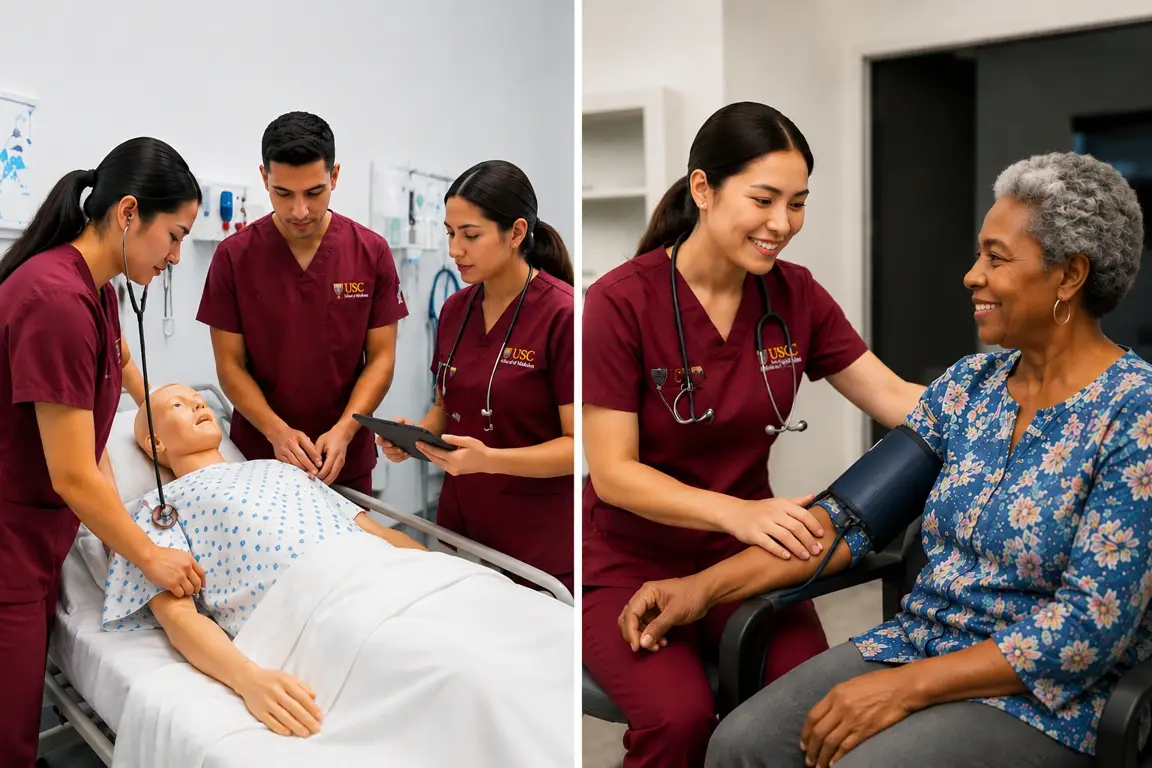
- Measuring and recording patient vital signs (blood pressure, temperature, pulse, respiratory rate, and oxygen levels)
- Interviewing patients to document symptoms, medications, and medical history
- Assisting physicians during exams and minor procedures
- Administering medications through oral, topical, and injection routes (per physician orders)
The split between clinical and administrative work varies by setting. Primary care offices offer a broad scope that covers both sides of the role. Urgent care centers tend to be faster-paced, with more emphasis on patient intake and point-of-care testing. Other common workplaces include specialty clinics (cardiology, dermatology, OB/GYN, pediatrics), community health centers, and hospital outpatient departments.
How clinical medical assistants differ from other healthcare roles
The clinical medical assistant role is broader than many entry-level healthcare positions. Unlike phlebotomists, who focus almost entirely on blood collection, or medical office receptionists, who handle administrative work only, clinical medical assistants work on both sides of the exam room door.
This versatility is one reason the role is a popular entry point into healthcare. You gain experience across clinical and administrative functions, which opens multiple paths for future specialization.
Is this role right for you?
The clinical medical assistant role suits people who are comfortable moving between tasks, enjoy working directly with patients, and want a position that stays active throughout the day. You will spend time on your feet, interact with patients who may be anxious or unwell, and need to stay accurate with details like medication dosages and documentation.
Strong candidates for clinical medical assistant training typically:
- Work well under pressure without losing attention to detail
- Communicate clearly with patients from diverse backgrounds
- Handle repetitive tasks (like vital sign checks) consistently and carefully
- Are comfortable with basic technology, since EHR systems are standard in most offices
The role also serves as a strong foundation for further career growth. Many clinical medical assistants go on to pursue nursing, medical coding, or other healthcare credentials once they are working in the field.
Step 2: Find the Right Training Program
Step 2: Find the Right Training Program
Not all clinical medical assistant training programs are the same. When evaluating your options, here are a few things to look for:
- Hands-on lab training with industry standard medical equipment, not just lectures
- A supervised externship in an actual healthcare facility, built into the program
- Flexible schedule (Hybrid program) so you can balance your school and personal life
The U.S. Colleges Clinical Medical Assistant program
U.S. Colleges checks all of these boxes. The Clinical Medical Assistant program includes 300 hours of classroom instruction and lab practice, including an 80-hour clinical externship at a real medical facility. The program is offered at all six Southern California campuses with no waiting list.
What you will cover in the classroom and lab:
- Clinical skills: vital signs, patient history, injections, specimen collection, and infection control
- Administrative skills: Medical terminology
- Lab practice using industry standard equipment, including exam tables, vital signs monitors, and electronic health record systems
Classes are kept smaller so instructors can work with you directly. Day, evening, and weekend schedules are available at select campuses to accommodate students who are working or managing family responsibilities.
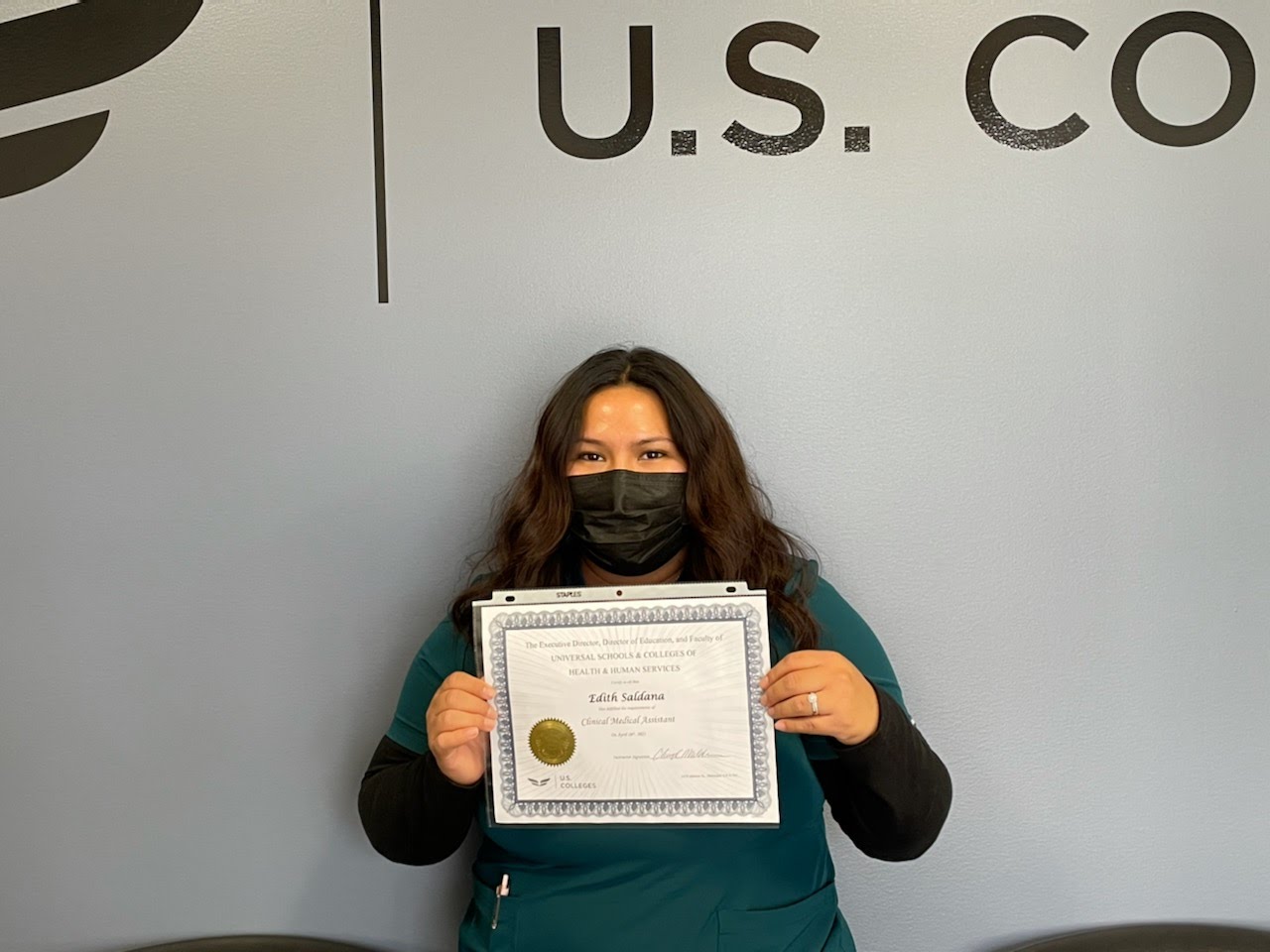
Upon completing the program, you earn a Certificate in Clinical Medical Assistant.
What to expect during your externship
The 80-hour externship is one of the most valuable parts of the program. U.S. Colleges places you in a real medical office, clinic, or healthcare facility where you work under the supervision of licensed professionals.
During the externship, you will:
- Apply clinical and administrative skills in an actual patient care setting
- Work alongside physicians, nurses, and other healthcare staff
- Build professional connections in your local healthcare community
- Demonstrate your abilities to potential employers firsthand
Step 3: Graduate and Start Your Job Search
As you approach graduation, U.S. Colleges’ Student Services team can help you prepare for the transition from the classroom to the workforce. Student Services supports students throughout their educational journey and provides career-readiness resources as graduation approaches.
Career-readiness support includes:
- Resume and cover letter development
- Interview preparation
- Professional branding
- Workshops focused on adaptability and teamwork
- Job search and career exploration resources
- Access to Career Edge, U.S. Colleges’ career development platform
Preparing for your clinical medical assistant job search
Your resume should highlight your externship experience, the skills you practiced in training, and the credential you earned. Many hiring managers in healthcare treat a completed externship as meaningful work experience, not just a school requirement.
During interviews for clinical medical assistant roles, you can expect questions about:
- How you handle patients who are nervous or in pain
- Your experience with specific clinical tasks (vital signs and injections)
- How you stay organized when managing multiple patients or tasks at once
- Familiarity with EHR software (Epic and Athenahealth are common in Southern California)
Practicing answers to these questions ahead of time, which Career Services can help you do, makes a real difference.
Thinking longer term
Your Certificate in Clinical Medical Assistant is a starting point, not a ceiling. Many clinical medical assistants use the role to build clinical experience while working toward additional credentials. Common paths include completing a phlebotomy certification, pursuing a nursing assistant program, or beginning prerequisites for an RN or LVN program. The clinical experience you gain as a clinical medical assistant gives you a meaningful head start in any of those directions.
Frequently Asked Questions
What does a clinical medical assistant do?
A clinical medical assistant performs both clinical and administrative tasks in a healthcare setting. Clinical duties include taking vital signs, assisting with exams, collecting specimens, and administering medications. Administrative duties include managing patient records and scheduling appointments.
How long does it take to become a clinical medical assistant in California?
At U.S. Colleges, the Clinical Medical Assistant program can be completed in as few as 12 weeks. The program totals 300 hours, including 220 hours of classroom and lab instruction plus an 80-hour clinical externship.
Do you need certification to work as a medical assistant in California?
California does not require state licensure for medical assistants. However, many employers prefer candidates who hold a national credential such as the Certified Medical Assistant (AAMA) credential awarded by the American Association of Medical Assistants.
What is the difference between a clinical medical assistant and an administrative medical assistant?
A clinical medical assistant focuses on patient-facing tasks: taking vital signs, assisting with procedures, collecting specimens, and administering medications while administrative medical assistants handle more office functions that include scheduling, billing, and recordkeeping. The clinical medical assistant program at U.S. Colleges will cover some administrative topics.
Ready to Get Started?
If you are ready to begin your path as a clinical medical assistant, U.S. Colleges is ready to help. With six convenient Southern California locations, flexible schedules, and a program that can be completed in as few as 12 weeks, you can start your healthcare career sooner than you might expect.